Correction: An earlier draft stopped at the 2025 release and described Jackson's graduation rate as stalled at 83.7%. It also said the district operated six high schools and included unsupported explanations for its results. This version uses the current package output through 2026, the published state comparison rows, and all seven Jackson high-school rows in the latest release.
Jackson Public Schools' published graduation rate rose from 65.1% in 2014 to 85.4% in 2026, a 20.3 percentage-point gain. The 2026 rate is the highest in the returned Jackson series.
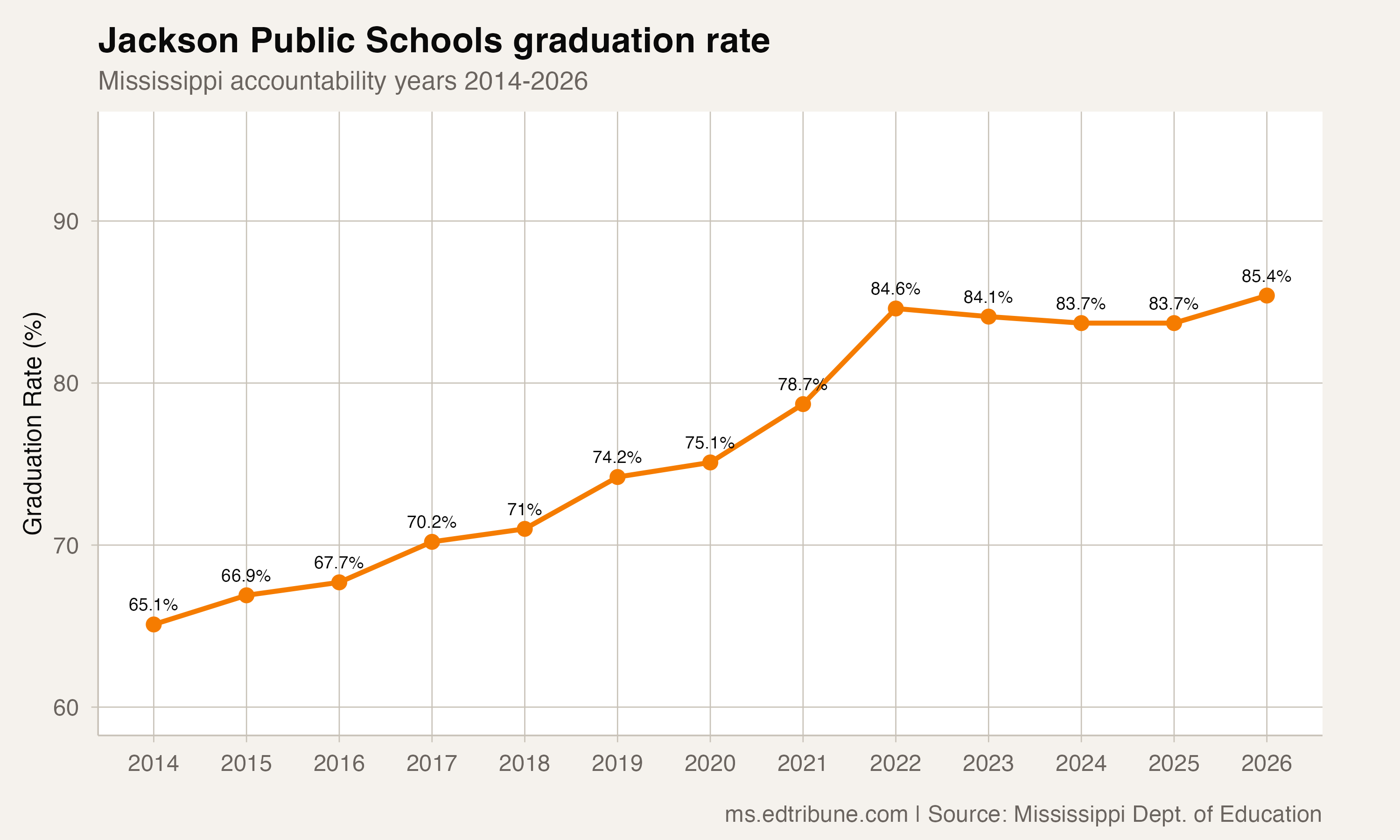
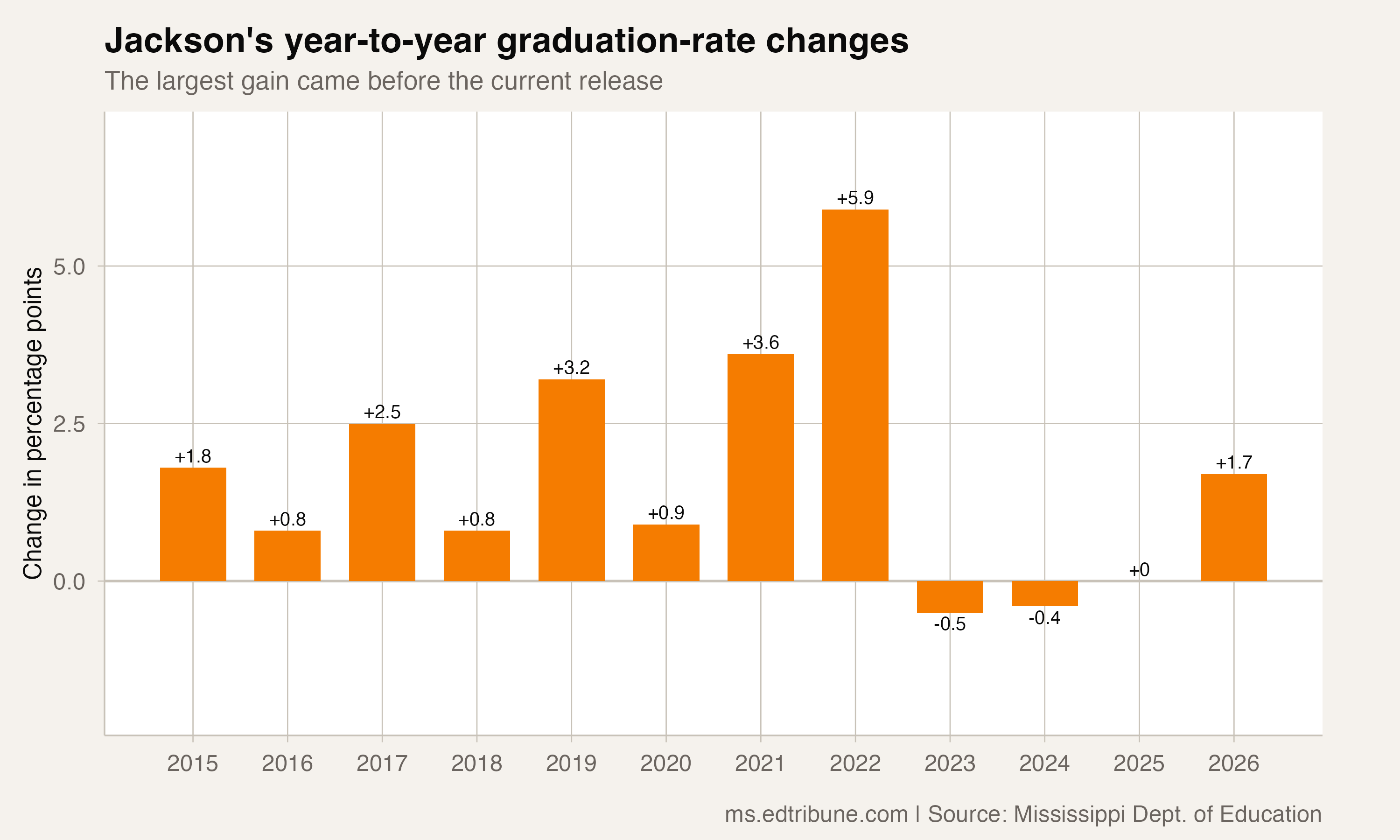
The improvement was not a straight line. The year-to-year chart shows both gains and declines, including a decline before the latest release and a 1.7-point increase from 2025 to 2026.
The gap with the state
The package publishes a Mississippi state row for 2020 and for 2026. In 2020, Jackson's rate was 75.1% against 85.0% statewide, a 9.9-point gap. In 2026, Jackson was at 85.4% and the state at 90.8%, narrowing the gap to 5.4 points.
Jackson's rate rose 10.3 points across those two published endpoints, compared with a 5.8-point state increase. The gap narrowed by 4.5 points, but Jackson still trailed the statewide rate in the latest release.
Among 141 published district rows in 2026, Jackson ranked 115th by graduation rate. That places the district's improvement in a more complicated frame: the rate is substantially higher than it was at the start of the series, but the district remains below most districts in the current release.
Seven schools in the latest release
The 2026 file contains seven Jackson high-school rows. Their published graduation rates range from 77.3% at Wingfield High School to 90.5% at Murrah High School, a 13.2-point spread.
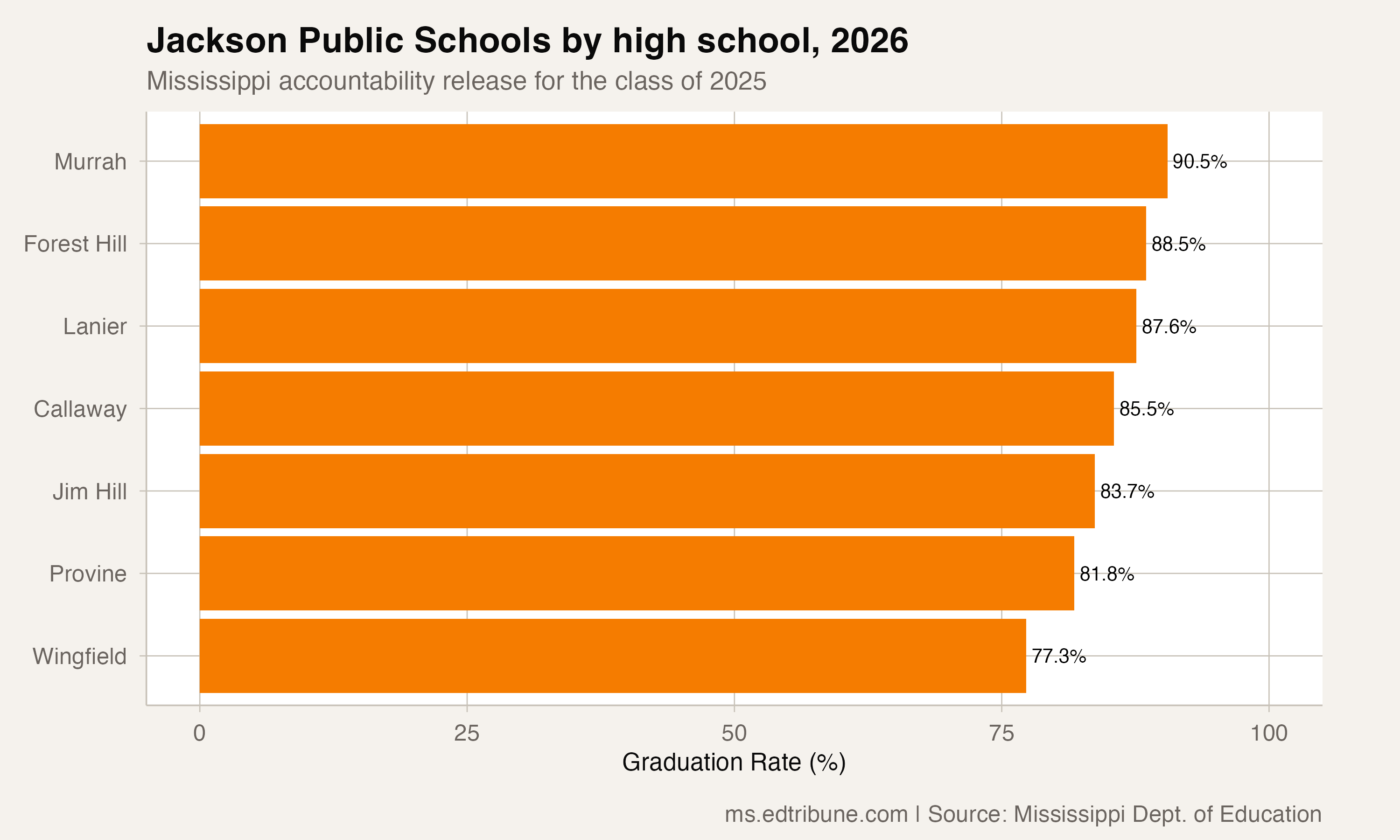
The school rows show variation inside the district, but they do not establish why one school's rate differs from another's. The state graduation file reports outcomes; it does not identify the effects of leadership, enrollment changes, student circumstances, or local programs.
What the data establish
Direct evidence: Jackson's published graduation rate increased 20.3 points from 2014 to 2026 and reached a series high in the latest release. Direct evidence: the district remained below the published statewide rate, even as its gap narrowed between the two state-comparison endpoints.
Unresourced: the graduation-rate files cannot explain which policies, practices, or demographic changes produced the improvement. The corrected story is therefore about measurable progress and a remaining gap—not a plateau that the current data no longer show.
Detailed code that reproduces the analysis and figures in this article is available exclusively to EdTribune subscribers.
Discussion
Sign in to join the discussion.
Loading comments...